Texans–Chargers by the Numbers: More Space on Offense, a Reset on Defense
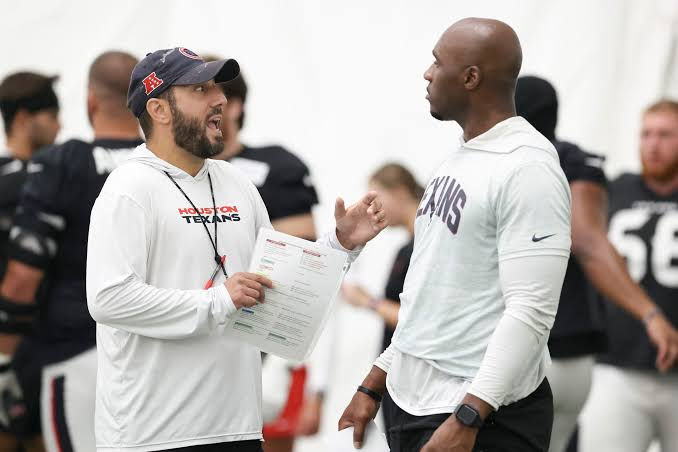
Photo: Houston Texans
The most encouraging part of Houston’s 44–22 win over the Chargers was how familiar the offensive answers looked. Spread the field. Keep receiving threats on it. Let C.J. Stroud attack. Use pace to make the defense react. These were changes I've wanted for some time and especially coming out of the bye, and Sunday offered a much clearer picture of an offense playing through its strengths.
In my bye-week offensive breakdown, the passing game looked like a foundation Houston could trust, while unsuccessful runs and certain heavier packages kept dragging down possessions. The companion defensive analysis asked whether DeMeco Ryans could restore more dependable football, especially with Jalen Pitre back. Against Los Angeles, both units gave us reasons to be encouraged. The details also show what still needs work.
The offensive change was in the deployment
Houston used 11 personnel—one running back, one tight end and three receivers—on 60 of the 68 plays in the charted offensive sample, or 88%. Those snaps generated +0.37 expected points added per play. The Texans used 12 personnel just four times, accounting for 6% of the sample. That is a meaningful shift from the 87 two-tight-end snaps in the seven-game sample I examined during the bye.
Blake Fisher’s seven offensive snaps also fit the reduced-jumbo approach. Houston still had that tool available; it simply did not make an extra offensive lineman the center of the game plan. Jumbo and 12 personnel are overlapping concepts, so their totals should not be added together. What mattered was the broader commitment to keeping pass-catching options on the field and making the defense defend more space.
The four plays from 12 personnel averaged −1.13 EPA, but that tiny sample is far too sensitive to an individual costly play to settle anything about the package. My takeaway is that Houston reduced its reliance on a grouping that had struggled, particularly when running the ball. The bye-week split was more specific than “two tight ends never works”: its 55 runs produced −0.19 EPA and 29.1% success, while its passing plays were considerably more viable.
There is an important distinction in the pass rate, too. Houston’s 63.2% rate against Los Angeles was actually below the 64.8% in that first seven-game sample. This was not simply a game in which Caley called more passes overall, although the large lead game script is a factor here. The encouraging change was the shape of the offense: more three-receiver football, more shotgun, and a willingness to keep attacking while ahead.
Stroud and the passing game drove the production
The offense generated +0.28 EPA per play and 7.6 yards per play in the charted sample, compared with +0.03 and 5.6 before the bye. Its explosive-play rate rose from 14.2% to 20.3%. Passing supplied the biggest difference: +0.52 EPA per dropback, up from +0.14, with a 53.5% passing success rate compared with 48.5%. That is a strong game, even with the usual caution about comparing one opponent with a seven-game sample.
The opponent deserves some context. Los Angeles entered the game winless, but the NFL’s Week 9 statistical capsule had the Chargers seventh in passing yards allowed, at 198.4 per game. That ranking measures yardage rather than overall passing efficiency, but it makes dismissing this performance as production against an obviously helpless pass defense too easy. More importantly, several of the changes were promising regardless of the opponent.
Shotgun accounted for 55 snaps, or 81%, and produced +0.49 EPA per play with 51% success. The nine singleback snaps generated −0.38 EPA and 11% success. Those are game results rather than proof that one formation always works and another never does. They do reinforce the case for allowing the spread passing game to establish Houston’s rhythm.
That did not mean protection suddenly became effortless. The charted pressure rate was 40.5%, even though Los Angeles blitzed on only 14% of the relevant plays. Houston still had to execute against pressure without assuming that keeping more bodies in the formation was the only answer. Stroud’s average target depth was 11.7 yards, with a 2.72-second average time to throw: the offense continued looking downfield.
Space, tempo and a more useful role for the run
My impression watching the game was that Caley finally gave the offense more of the pace and space I have been asking for. I liked the use of tempo, the halfback draws as a complement to a passing offense, and the willingness to get runs to the perimeter. Draws can punish defenders who are anticipating pass and getting upfield; they make sense as part of an attack built around Stroud. These are observations about the calls and their fit, rather than a claim that the available direction totals prove an increase in outside-zone usage.
The rushing results themselves were still modest: −0.13 EPA per attempt, 32% success and 3.6 yards per carry in this sample. Before the bye, the figures were −0.17 EPA and 34% success. That does not support declaring the running game fixed, or saying that passing had already opened it up into an efficient rushing attack. What I liked was the direction of the plan: let the passing game influence how the defense plays, then choose complementary runs rather than forcing the run to establish the entire offense.
Empty worked again, producing +0.55 EPA per play with two positive-EPA outcomes on three snaps. In the bye piece, Houston’s 23 Empty snaps had generated +0.24 EPA and 56.5% success. Three more plays are encouragement to keep developing that menu, not enough to prove that it should become the base formation. I would still like to see it used more deliberately, with the protection and hot-route answers needed when the defense challenges it.
I also liked moving Nico Collins into the slot, particularly on first downs, to find a useful gain and get a possession moving. Changing where he aligns can make it harder for a defense to treat him as a fixed outside matchup. The available team splits do not isolate his slot targets, so I am not attaching a manufactured efficiency number to that observation. It is a deployment choice worth building on.
Intermediate answers and aggression while ahead
The intermediate passing game continued to offer real value. On 16 charted targets 10–19 yards downfield, Houston generated +1.06 EPA per play with 63% success. That builds on a strength identified during the bye, when that target range produced +0.50 EPA across 63 plays. The Texans found valuable throws without needing every completion to travel 20 yards in the air.
Coverage results were uneven. Houston generated −0.26 EPA on 16 classified plays against Cover 3, compared with +1.36 on nine against Cover 4. Cover 1 yielded +0.59 across seven plays. The two Cover 2 plays were especially valuable, but that sample is too small for a sweeping conclusion. These are results against the coverages encountered in this game, not a clean experiment separating scheme, receiver execution and individual matchups.
Houston also produced positive EPA in every quarter, including +0.40 per play in the fourth. In the charted score-state split, 59 plays came while leading and nine while tied. Continuing to generate value with the lead fits what I liked about the approach: Houston did not have to turn its passing strengths into an emergency option.
There are still consistency questions. First downs averaged −0.10 EPA, while third downs generated +1.01 and the offense converted 60% of its third-down opportunities. The overall positive-EPA success rate was 45.6%, only a modest increase from 43.4% before the bye. The explosive production improved much more sharply than the frequency of successful plays. Keep the aggression, but keep searching for easier early-down answers so every productive afternoon does not require exceptional third-down results.
Defense: a welcome reset, with a different coverage balance
Houston allowed −0.14 EPA per play, 4.6 yards per play and a 38% offensive success rate in the 71-play defensive sample. Those figures compare favorably with +0.05 EPA, 5.4 yards and 42% success in the first seven games. The explosive-play rate allowed fell from 14.9% to 10.3%. That is a broadly better defensive performance, even though a single game cannot establish the unit’s new level.
One of the more interesting changes was the coverage balance. The Texans played man on 13.3% of the relevant charted snaps, compared with roughly a third against Jacksonville and the Giants. The blitz rate was 20%, also well below those two games. Pitre’s return fits the structural question from my bye-week piece: could Houston get back to more comfortable answers without leaning so heavily on man coverage and extra rushers? Sunday was an encouraging example, although opponent and game plan matter alongside personnel availability.
Houston used nickel on 48 snaps, or 68%, allowing −0.20 EPA per play, and base personnel on 23, allowing −0.03. Nickel is a personnel designation, not a box count or a guarantee of two deep safeties. These totals therefore cannot prove that Houston solved the run with a light box. They do show a productive afternoon from a defense that spent most of its time with five defensive backs on the field.
Eight sacks mattered. The coverage still had vulnerable spots
The official game record gives Houston eight sacks and two takeaways. Those were major possession-changing plays. The charted pressure rate, however, was 26.7%, below the 31.8% from the first seven games. Eight sacks should not be translated into a claim that Houston pressured the quarterback on nearly every dropback. The defense converted a limited set of pressure opportunities into a particularly damaging sack total.
The Chargers’ aggregate passing sample generated −0.02 EPA per dropback and succeeded on 32.5% of plays. That is encouraging, but it includes both quarterbacks rather than representing Justin Herbert alone. Nor were all of Houston’s coverage answers equally dependable. Cover 3 allowed approximately neutral EPA across 15 classified plays, while Cover 4 allowed +1.58 on eight. Cover 6 was productive for Houston on three plays. The samples are small, but the Cover 4 results are a reason to review the specific breakdowns rather than describe the coverage performance as uniformly dominant.
Kamari Lassiter’s performance supplied an encouraging individual example. In the PFF figures I shared, he was charged with one reception on five targets, with three pass breakups and no missed tackles. The lone catch still carried a substantial yardage cost. That combination illustrates why coverage evaluation needs the actual plays as well as the completion total.
Run defense: useful disruption, unfinished situational work
The rushing EPA allowed was an excellent −0.30 per attempt, but the Chargers still averaged 4.5 yards per carry and posted a 45.2% rushing success rate in the charted sample. That success rate was higher than the 42.5% Houston allowed before the bye. A fumble on a running play also contributed to the favorable EPA result. The correct takeaway is that Houston created valuable negative outcomes, not that Los Angeles repeatedly failed to gain useful ground.
The short-yardage concern from the bye has not disappeared. Across all play types with one to three yards to gain, the Chargers generated +0.15 EPA and 57% success on seven plays. Fourth downs averaged +1.05 EPA allowed. Neither split isolates short-yardage runs, and both are small, so they cannot answer exactly how Houston defended every third-and-1 or fourth-and-1 rush. They are enough to keep situational execution on the list rather than allowing the overall rushing EPA to close the discussion.
The quarter splits supply another qualification. Houston allowed negative EPA in each of the first three quarters, including −0.59 in the third, before allowing +0.38 in the fourth. With Los Angeles chasing the game throughout its charted offensive sample, those late results came in a different competitive situation. Houston had earned control of the game, but finishing possessions and limiting late production remain part of the standard.
A reason for optimism, and a plan worth keeping
This gives me more reason to believe the defense can work its way back toward a high-level unit under DeMeco. It does not settle a Burke-versus-Ryans debate, isolate the effect of the bye, or prove that early problems were the result of habits built during an offseason with Matt Burke having more operational control. That remains a theory about how the defense got here. One game cannot establish the coaching cause.
What Sunday did provide was a more encouraging combination: fewer man-coverage and blitz demands, Pitre back in the picture, disruptive plays up front and better overall defensive efficiency. The next test is whether that carries across opponents while Houston tightens the vulnerable coverage snaps and short-yardage situations. A return toward top-tier defense is a reasonable hope; declaring a top-five unit restored would run ahead of the evidence.
On offense, I feel more strongly about the direction. Caley put more receiving threats on the field, used the passing game as the engine and gave us more of the tempo and spacing this group should be able to exploit. The run game still needs work, and first-down efficiency needs to catch up with the explosive plays. But Houston gave itself a better platform. Now that we have seen it, keep doing it.
Data note: Advanced metrics use the supplied Week 9 charted samples (68 Houston offensive plays and 71 opponent offensive plays), compared with the seven-game samples in the linked bye-week analyses. Success means offensive EPA greater than zero; lower EPA and success allowed favor the defense. Explosives are passes of at least 15 yards or runs of at least 10. Coverage, route and target-depth results cover available classified plays; blitz labels use FTN charting. These sample totals differ from the official box score and should not be combined with its denominators. Official game facts and the pregame passing-yardage ranking are linked above. Tactical observations reflect my game impressions; small samples do not establish causation.
Keep the conversation going
Which changes do you want Houston to keep against its next opponent? Join the Houston Stressans community and bring your take. You can also support independent Texans coverage with gear from the Houston Stressans store.


Comments